



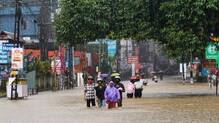
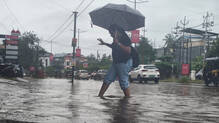
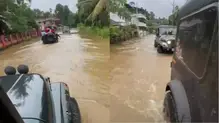
THIRUVANANTHAPURAM: With the monsoon in full swing, motorists have been urged to exercise extra caution on wet roads, where standing water significantly increases the risk of hydroplaning. Motor Vehicles Department (MVD) officials said 85 accidents linked to such conditions have been reported over the past month.
Drivers have been advised against speeding through waterlogged stretches or deliberately splashing water to either side of the road, warning that such behaviour can lead to serious accidents.
Hydroplaning occurs when a layer of water forms between a vehicle's tyres and the road surface, causing the tyres to lose grip. This can result in the driver losing control of steering, braking and the vehicle's direction, increasing the likelihood of skidding, overturning or colliding with other vehicles.
The risk is higher on national highways, where smoother road surfaces make hydroplaning more likely. The phenomenon develops when vehicles travel at speed on wet roads, preventing water beneath the tyres from draining away effectively.
One of the factors believed to have contributed to the July 26 accident at Kuttippuram in Malappuram, where a private bus skidded on a national highway, struck a divider and overturned, killing one person, was hydroplaning.
Under normal conditions, water is channelled away through the grooves in a tyre's tread, allowing the tyre to maintain contact with the road. However, at higher speeds, the water cannot drain quickly enough. The resulting water pressure lifts the tyre off the road surface, reducing traction. Officials warned that hydroplaning can occur even at speeds of 35-45 kmph, with the severity of the risk increasing as speed rises.










 HOME
HOME LATEST
 NOTIFIED NEWS
 POLL
POLL KERALA
  EDITORIAL
  INDIA
INDIA  WORLD
WORLD  CINEMA
  SPORTS
  LIFESTYLE
  SPECIAL
  SCIENCE & TECHNOLOGY
 |
|